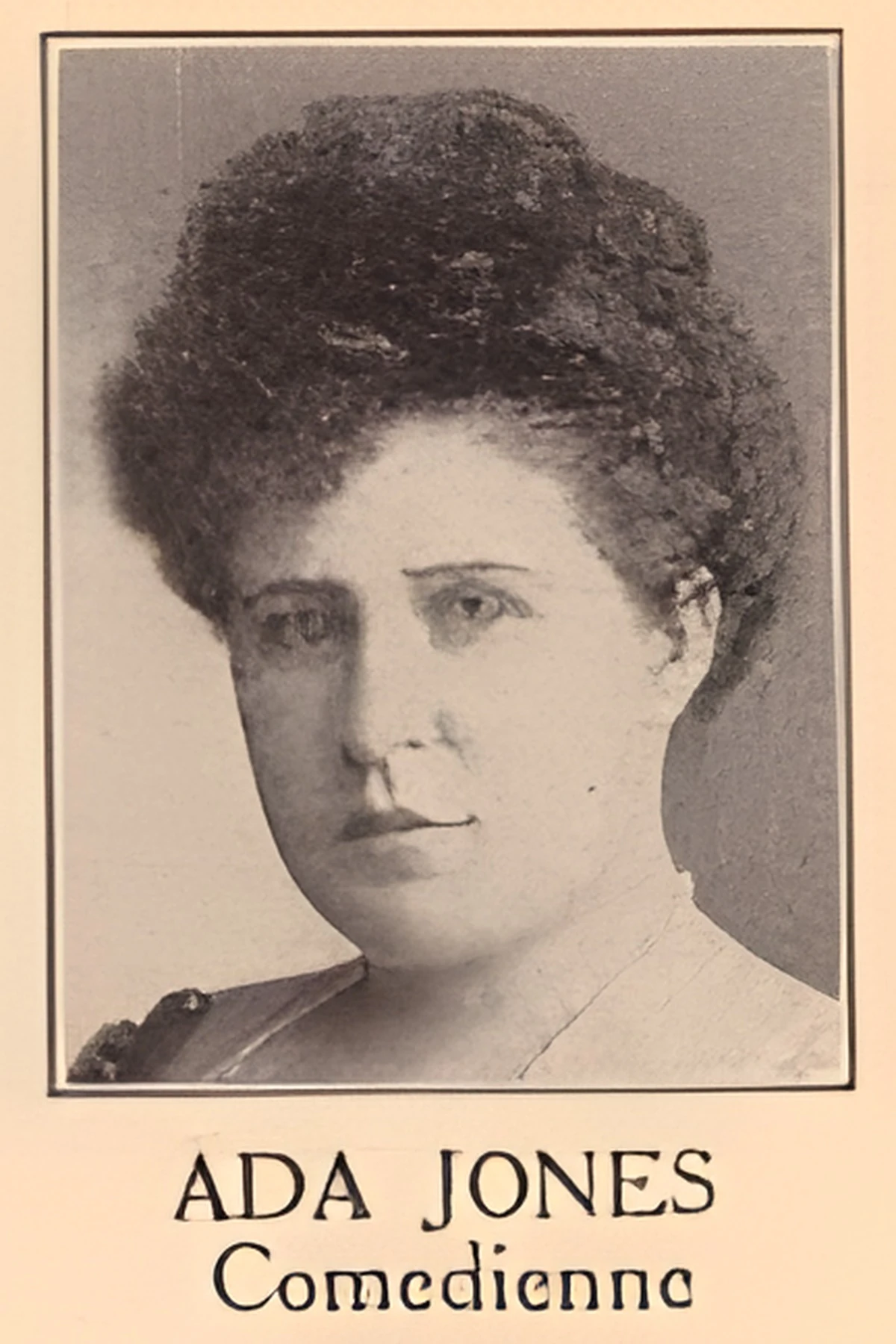
Ada Jones
Who She Was
Ada Jane Jones was born on June 1, 1873, in Oldham, Lancashire, England, and came to Philadelphia with her family around 1879. She grew up to become the dominant female recording star of the acoustic phonograph era — a contralto who learned every song by ear, never read music, and couldn't play an instrument, yet amassed over 740 known discs by 1921. Her peak years ran from roughly 1905 to 1912, when cylinder and disc recordings were the primary way most Americans heard popular music at home. She died on May 2, 1922, of acute uremia, while on a concert tour in Rocky Mount, North Carolina. She was 48.
A word about the catalog entry bearing her name: Ada Jones was not a radio performer. She died before widespread broadcasting began. The recordings cataloged here are her phonograph sides and vaudeville sketches — audio documents of a career that predates the medium entirely, but that belong in any serious collection of American popular performance history.
What She Recorded
Jones made her first recordings in 1893 on Edison brown wax cylinders, placing her among the earliest — and possibly the first — female solo artists to be commercially recorded. Her debut sides included "Sweet Marie" and "The Volunteer Organist." From there she recorded extensively for Victor, Columbia, and Edison, eventually charting 128 hit singles across her career.
Her repertoire was wide by any standard. She sang sentimental ballads, ragtime numbers, Broadway songs, and comic dialect sketches — Irish, German, vaudeville Bowery, and others. The Victor catalogs of the era described her as capable of impersonating "a darkly wench, a little German maiden, a fresh saleslady, a cowboy girl, a country damsel, Mrs. Flanagan or an Irish colleen, a Bowery tough girl, a newsboy or a grandmother." That list alone captures something of what made her valuable to record labels: she was a one-woman repertory company in an era before microphones, when projecting character through a recording horn was its own demanding skill.
The Partnerships That Produced the Hits
Much of Jones's commercial success came through duo recordings. Her partnership with tenor Billy Murray was the most prolific and the most charted — 43 hit singles between them, including "Let's Take an Old-Fashioned Walk" (1907), "Cuddle Up a Little Closer, Lovey Mine" (1908), "Shine On, Harvest Moon" (1909), and "Be My Little Baby Bumble Bee" (1912). Murray was the era's most recorded male voice, and together they made a natural pairing for the romantic and comic material that sold best.
Her other major partnership was with vaudeville performer Len Spencer, with whom she recorded dozens of comic sketches. They worked under a rotating cast of character names — Reuben and Cynthia, Rudolph and Rosie, Louie and Lena, Jimmie and Maggie — sketches that drew on ethnic and regional types popular in vaudeville at the time. Twenty charted hits came out of that collaboration. She also recorded with the American Quartet, the Peerless Quartet, Henry Burr, Cal Stewart, and Billy Watkins, making her one of the most frequently heard voices in American homes during the first two decades of recorded sound.
The End of Her Career
According to researcher Tim Gracyk, Jones suffered from epilepsy, which made live stage performances difficult and pushed her heavily toward studio recording work. That constraint shaped a career that might otherwise have unfolded differently — it made the recording studio, more than the stage, her natural home.
After World War I, musical tastes shifted toward novelty jazz, and Jones's brand of comic-dialect and sentimental balladry lost ground. Her last significant hit as a duo with Billy Murray was "When Francis Dances With Me" in 1921. She was still working when she died the following year. One family artifact survives from her later period: a 1918 recording of "A Day in Toyland," made with her daughter Sheilah, who was twelve years old at the time. Jones had married dancer Hughie Flaherty earlier in her career.
What Survives
The catalog entry titled "Ada Jones and Brunswick Quartet" reflects the kind of ensemble recording she made throughout her career — she frequently recorded with vocal quartets, including the American Quartet and the Peerless Quartet, though no historical discography source has located a specific recording under the Brunswick Quartet name. Archeophone Records, a Grammy-winning label focused on acoustic-era music from the 1890s through 1925, has featured Jones's recordings in multiple compilations and reissues, contributing to renewed recognition of her place in recording history.
She is remembered not as a soap opera figure — the genre didn't exist until years after her death — but as the most recorded female voice of the pre-1920 acoustic era, someone whose range of characters and sheer output left a documentary record of what popular American music sounded like before broadcasting changed everything.